Chat.NET
Technologies used
- Next.js
- TypeScript
- ASP.NET 8
- SignalR
- Entity Framework Core 8
- PostgreSQL
- Redis
- MongoDB
Project overview
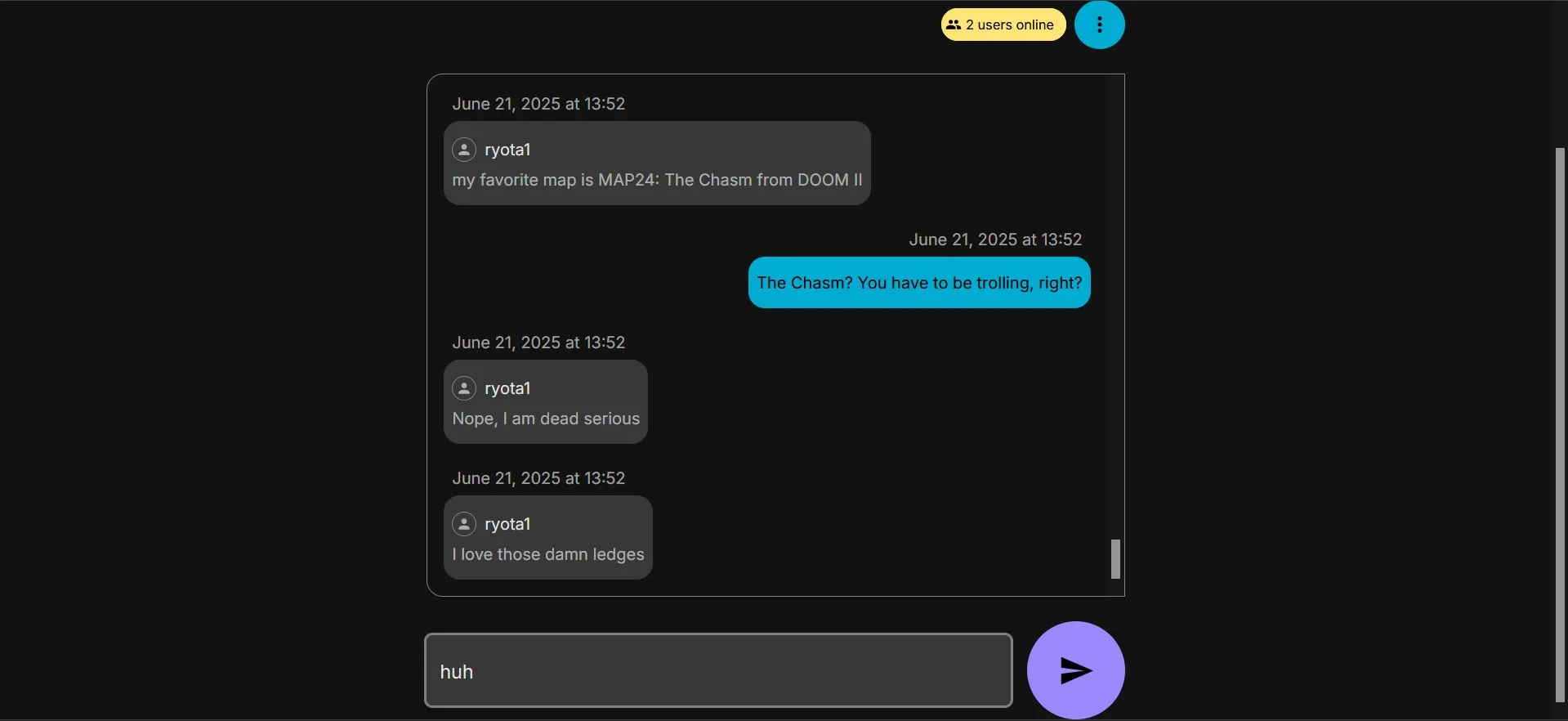
Chat.NET is a chat application that I wanted to develop with the intention of challenging myself with a few problems that I had never had an opportunity to address before that. Most of those have been solved at their core, though it's worth keeping in mind that the app is not completed as of yet.
The challenges I purposely set for myself were the following:
- Managing a large amount of technologies - the app uses more technologies (such as databases) compared to my other personal projects to store different types of data
- Developing my own UI - rather than rely on existing component libraries (like Material UI for React), I wanted to try my hands at creating my own component library, suited specifically for the needs of the app
- Developing a real-time application - up until now, my projects had mostly been using REST APIs (which I also authored) and, for once, I wanted to create a project that has data that updates in real-time
The app uses three different DBMS for its needs: a PostgreSQL database for long-term storage (like chat rooms and users), a Redis store for managing user sessions, and a MongoDB store for managing punishments (an example of a punishment is a ban from a chat room. Read more about this in the next paragraphs!). All of those (including the .NET and Next.js services) are managed via Docker Compose, making development with that many services much easier.
The app also rolls out its own UI, which includes its own theming system and its own component library. The theming system includes support for light and dark mode, colors for various contexts (such as primary, secondary, success, warning, etc.), which are adapted for those modes, and animations, among others. The component library features over 20 components, ranging from simple ones like typographic ones and alerts to more complex ones like paginators and drawers. The style of the library leans towards being more opinionated (i.e. many design decisions have already been taken), but with some room for customization where appropriate (for example, the paginator, by default, uses its own implementation with buttons, but the component allows you to define its HTML structure with a render prop). The only design dependencies the UI has are for incredibly difficult tasks that are not worth reimplementing, such as focus traps.
The real-time connectivity of the app is not limited to just messaging other users in chat rooms. One other special functionality is the support for chat commands. The chat commands in this app have their own text-based syntax. Currently, commands are used to apply punishments to misbehaving users. This feature also includes real-time notifications (for example, if the user is banned from a chat room, they will get a pop-up that informs them of this action).
Despite being a real-time app, it still relies on REST API for some tasks, such as searching for chat rooms (which can also have categories!). Another planned feature is the addition of a management system for articles to support a blog for the app.